New article in Reports on Progress in Physics

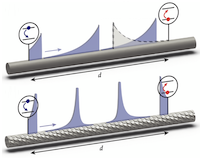
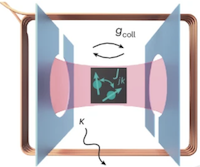
Together with Jan Wiersig from Magdeburg/Germany, we just published an article in Reports on Progress in Physics (open access) that combines two research thrusts in our group: Fisher information (FI) and Exceptional Points (EPs). We demonstrate how EPs can enhance the FI and how moving away from the EP can lead to an even greater improvement in measurement precision. Our work establishes a general framework for understanding the role of non-Hermitian degeneracies in parameter estimation and clarifies under which conditions EPs provide genuine metrological advantages.

Resonant physics of open photonic time crystals

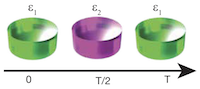
A joint paper with colleagues from Graz and Cardiff has just appeared in Laser & Photonics Reviews. In this work, we develop a resonant-state theory for finite photonic systems that are periodically modulated in time. While these photonic time crystals are often discussed in terms of bulk bandgaps, realistic implementations are finite and open. We show that their dynamics is governed by resonant states (quasinormal modes), revealing how parametric amplification emerges as a resonant process. Congratulations to Adrià, Sergei, David, Egor, Thomas and everyone involved!

Wavefront shaping for enhanced optical trapping

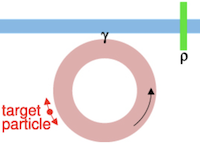
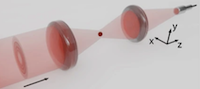
In a collaboration with our former Marie-Curie fellow Nicolas Bachelard from Bordeaux, we have just published a new article in Nature Communications. We show both theoretically and experimentally that tailoring the wavefront of the trapping light allows one to control optical scattering forces and significantly enhance the confinement of nanoparticles levitated in vacuum without increasing laser power. Our results challenge the conventional view of diffraction limited trapping and open new perspectives for optomechanics experiments approaching the quantum regime.

Introducing the fingerprint matrix in Nature Physics

In a joint work with the team of Alexandre Aubry, from the Institute Langevin in Paris, we demonstrate how to detect and localize objects that are hidden from view inside a highly scattering medium. As laid out in the corresponding article published today in Nature Physics, the key ingredient is the “fingerprint matrix” of the object – see also the press release by TU Wien and a very nice News & Views piece by I. Starshynov.

New paper in Nature Photonics on the ultimate limit in extracting information by deep learning

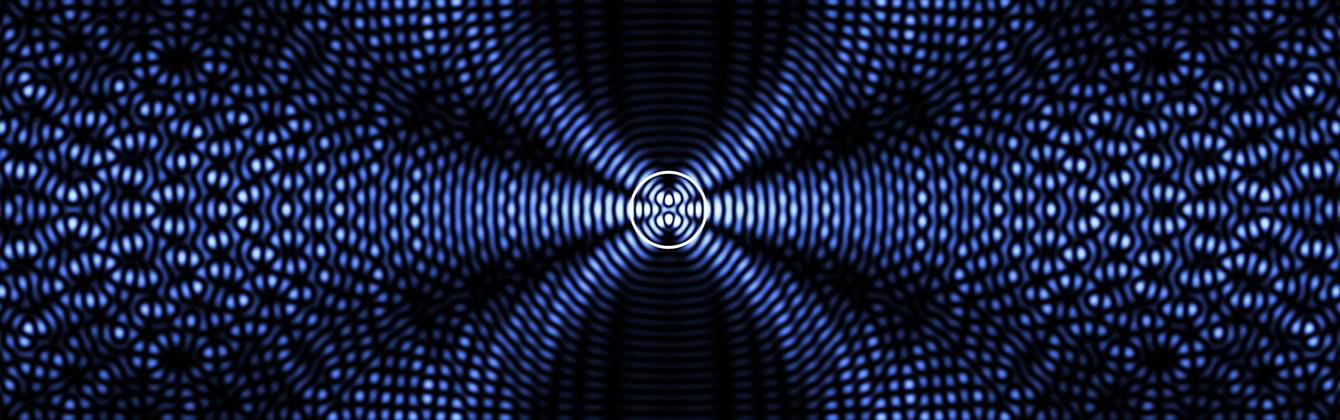
In a new paper with Max, Lukas and Günther, recently published in Nature Photonics, we explored how artificial intelligence can extract the maximum possible information from distorted optical signals. Using neural networks trained on seemingly chaotic light patterns, we approached — and nearly reached — the theoretical limit of precision, which we showed to be defined by the Cramér–Rao bound. Many thanks go to our collaborators in France (Dorian Bouchet) and Scotland (Ilya Starshynov and Daniele Faccio) as well as to Oliver for creating the great feature image shown on the top left. Check here for TU Wien’s press release.